Rwanda's F1 track: 6km, 17 corners and a lap built for overtaking
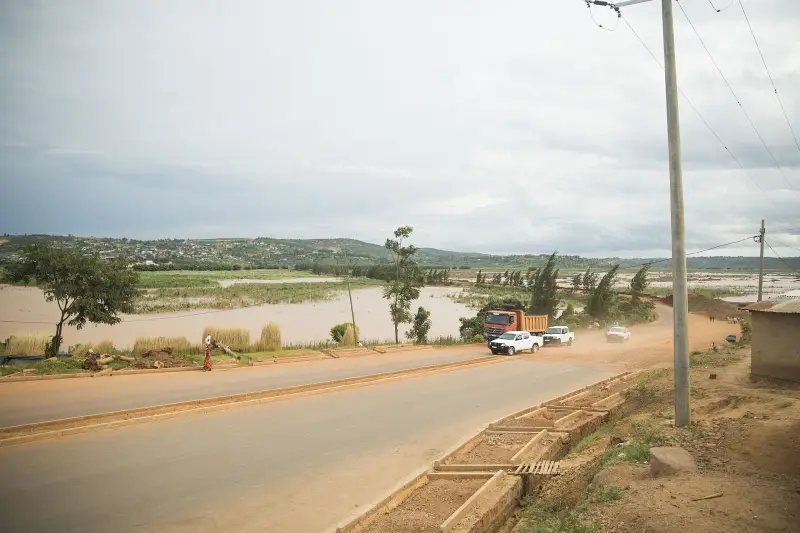
The track that will host Rwanda's African Grand Prix from the early 2030s is not a street circuit. It is a purpose-built venue between two hills and a lake in Bugesera, south of Kigali. Known for now as the RISE Motordrome, it is planned as an anti-clockwise lap of about 6km with 17 corners and 197m of elevation change. The full layout is still under wraps and only a handful of renders exist, but the designers have described the sections and the thinking behind them in some detail, and the headline is simple: it is meant to be a track for overtaking and fighting.

The track in numbers
There is no official spec sheet yet. These figures are drawn from F1's own site and from reports of interviews with the designers.
| Item | Detail |
|---|---|
| Name | RISE Motordrome (working title) |
| Location | Bugesera, Eastern Province, about 40km south of Kigali, next to the new Kigali International Airport due in early 2028, on a lakeside (named by the Express as Lake Kidogo) |
| Length | About 6km (Formula1.com); no final figure yet |
| Corners and direction | 17 planned, anti-clockwise |
| Elevation | 197m per lap (Tilke), gradients approaching 15% |
| Longest straight | Just over 1km, into a hairpin |
| Altitude | 1,300-1,400m (PlanetF1), around 1,400m (The Race) |
| Capacity | About 100,000 a day; 300,000 (The Race) to 400,000 (Express) over a weekend |
| Design | Tilke (lead consultant), Alex Wurz's Wurz Design (layout advice), Dar |
| Grade | Built to FIA Grade 1 |
What we know, section by section
Without a published map the full corner order cannot be confirmed, but this is how Wurz described the sections in interviews with The Race, F1i and others.
- Wide-open sequences: a run of wide corners laid out so that attack and defence alternate.
- Turn 2: flat out down a 10.8% descent into a heavy compression with 12% banking, then out up a 14% climb. "You will only see sky," says Wurz, who expects cars to exit uphill at around 240km/h and to be able to run side by side through the corner.
- Canopy corner and the lake: Wurz's favourite part of the lap. Out of a corner under the forest canopy, over a crest towards the lake, through a 10% compression and into fast esses. "We go very close to the lake with fast corner combinations," says Tilke.
- Forest corner: "Only drivers and African forest. No spectators," as Wurz puts it, followed by a hill and a double right-hander.
- Back straight: more than a kilometre long, it plunges downhill into a compression, climbs steeply and ends in a heavy braking zone and hairpin. None of this is visible in the first render.
- Final sector: over a crest into seven corners in a row. Get greedy at Turn 12, says Wurz, and you lose a tenth at every corner that follows. The Race notes that the esses at the end of the lap resemble Suzuka's without copying them.
Designing for overtaking
Wurz says the track is "made for overtaking and fighting". His complaint about many circuits is that drivers close up through a great sequence of corners, then "you can't execute an attack on an overtake, because it's just 50 metres not long enough". Hence the kilometre-plus straight into a hairpin, and three zones where cars brake from around 300km/h to 80-100km/h while already turning. Wurz calls those "the sneaky overtakes", the places for real dive-bombs.
Defending has a price too. Cover the inside in those zones and you are three and a half to four tenths down on the next straight, which brings the car behind straight back into play, while a missed entry line costs time through the whole sequence that follows. Wurz rates it "better than Suzuka, maybe not as perfect as Austin, but almost" for overtaking and fighting, and Tilke lists overtaking points, varied strategies and a strong qualifying and race among the goals. Wurz is careful not to overpromise, though: how many passes it produces is "random" and depends on the tyre supplier and degradation on the day. Track width and the number of usable lines have not been published.
Shaped by the land, dressed by the buildings
A street circuit and the old airport site were also considered before a visit to Bugesera settled it, Wurz said. "The nature designed already the perfect topography," he says, and the lap climbs and falls with the hills rather than having an artificial layout imposed on them; he told The Race it is "authentic and bespoke to the topography". He argues a circuit needs one coherent philosophy rather than copies of famous corners, which is why a corner with no spectators at all made the cut. Nor is it built around one rulebook: Wurz says it suits touring cars, motorbikes and endurance racing as well as F1.
The Rwandan identity goes into the buildings rather than the lap. Tilke wants pit buildings and grandstand roofs in local architectural styles and a central pavilion to showcase Rwandan culture, and Wurz wants the TV pictures to look unmistakably like "the African Rwanda Grand Prix". The wider project ties the circuit to the new airport, an airport city, tourism and hospitality, with karting, a driving experience centre, off-road courses and concert space planned alongside.
Altitude and surface
The Race puts the site at around 1,400m above sea level, second only to Mexico's Autodromo Hermanos Rodriguez on the calendar (F1's own site lists Kigali itself at around 1,500m and Mexico City at 2,200m). "We have less pressure in the air, that means also less grip from aerodynamics," Wurz said, adding that camber will help compensate and that there are no off-camber corners. The asphalt mix will be settled with the FIA, using local stone where possible, with wet grip a priority given how often showers roll through.
One render and what is still undecided
A single render from design firm Dar, looking down over the lakeside hills, came with the announcement (you can see it in Formula1.com's article), and The Race has since published more. Because the first image leaves out the back straight and hairpin, some fans concluded there were no big braking zones; Wurz says the perspective also makes some corners look off-camber when they are not. Drivers with 12 world titles between them have driven it in the simulator, and the layout will be refined with more input from teams and drivers.
According to PlanetF1, the project is in detailed design and construction has not begun in earnest. The Race expects the first race in 2030 at the earliest, possibly 2031, and names June to September, the dry season, as the best window.
Sources
- The Race — What one image can't show you about Rwanda F1 track
- The Race — Visiting F1's new Rwanda track - everything we learned
- F1i — Forest, hills and havoc: Wurz describes Rwanda's new F1 circuit
- GRANDPRIX247 — Alex Wurz and Carsten Tilke shed light on the Rwandan Grand Prix Formula 1 circuit
- Formula1.com — Hills, a lake and a 'roller coaster' – inside Rwanda's plan for the African Grand Prix
- Formula1.com — Everything we know about F1's all-new race in Rwanda
- PlanetF1 — Rwanda F1 circuit: What we know about the new RISE Motordrome
- PlanetF1 — African Grand Prix 'iconic' F1 corner revealed
- MotorBiscuit — F1 Circuit Designers Spill Details of Roller Coaster African GP Layout Seen By Champion Drivers
- Express (via AOL) — F1 Rwanda circuit designers confirm name and show new image of 400k-capacity Africa track
- Speedcafe — New details emerge about 'roller coaster' African Grand Prix track
- Taarifa Rwanda — Rwanda's F1 Circuit Could Be Unlike Anything Formula 1 Has Seen Before